
Witcher 3 Remastered Combat
Light and heavy attacks, dodge versus roll, Quen, oils, new finishers, and the camera work from remaster interviews.
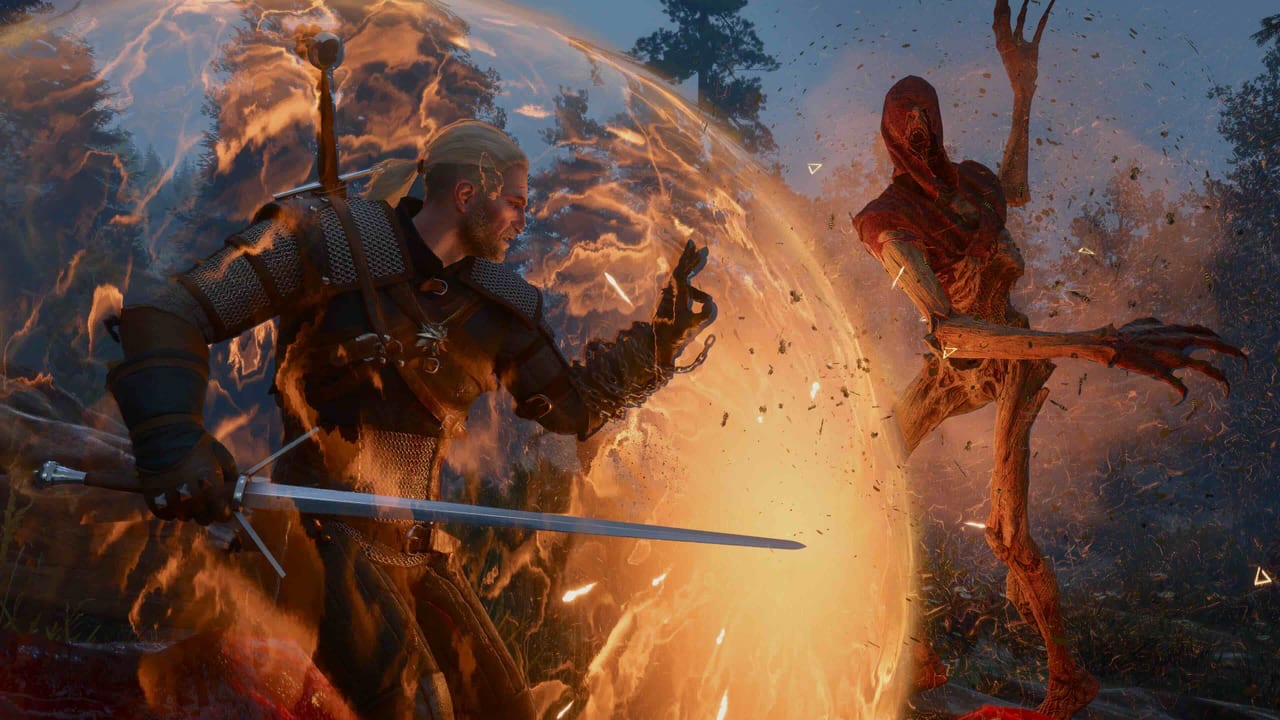
The Witcher 3: Wild Hunt — Remastered launches September 29, 2026 with enhanced combat, new finishers, new Signs FX, enhanced monster behaviors, and refined animations. The fantasy is still the same: Geralt is a professional, not a berserker. Steel for humans and beasts, silver for monsters, a Sign in the off hand, an oil on the blade, and a dodge that happens before the telegraph finishes. If you need button maps, open Controls. If you need Swallow, Thunderbolt, and Yrden, open Signs and Alchemy. If you have not left the mill, finish Getting Started first.
CD PROJEKT RED’s Gamescom interviews framed the pass as making combat “more modern, smooth and precise”: an updated camera, an updated targeting system, new animations, and new finishers, plus a skill tree revamp so the RPG layer has more room. Yigsoft’s combat talk after the reveal added the detail that matters in the hands — Geralt is no longer stuck in a binary close-or-far spacing. More engagement distances exist, and the protagonist will take a step or two toward a target so a swing you expected to connect does not whiff, and so you are not yanked into a hitbox you never asked to enter. They described the intended rhythm as a dance. That is marketing language with a practical translation: stop mashing light attack from a dead stop, and start moving on purpose.
Light attacks, heavy attacks, and when to stop swinging
Light attacks are fast, chain well, and are the default against humans and lighter monsters. Heavy attacks are slower, break through certain defenses, and matter against armored opponents and larger beasts that shrug small hits. The remaster’s extra spacing steps make lights more honest at the edge of range; they do not make a five-hit combo free. Stamina still gates signs, rolls, and some offensive skills. If the bar is empty, you are a man in a shirt.
A useful first-hour drill in White Orchard: fight drowners on the river with only lights and dodges until you can finish a pack without rolling. Then allow one heavy per opening. Then allow Igni. That order teaches you the new connecting steps without hiding mistakes behind a Sign explosion.
Finishers are new and flashy. They are a reward for a fight you already won, not a combo you fish for by standing in a griffin’s landing zone. If a finisher camera happens, let it play; do not assume the next enemy in a group is frozen. Group fights still punish tunnel vision.
Dodge versus roll
Dodge (the short sidestep) is the default defense against single strikes. It costs less stamina, keeps you near the target, and matches the dance spacing the remaster wants. Roll is for area attacks, griffin takeoffs, noonwraith screams, and anything whose hitbox is a circle around you. New players roll too much, run out of stamina, and then eat the next hit with Quen down. If you only remember one rule from this page: dodge small, roll big.
Counterattacks still exist if you time a block into a human swing. They are optional on Story and Sword and close to required against shielded foes on Blood and Broken Bones. Monsters that say “unblockable” in the bestiary mean it; dodge those, do not hold block and argue with the tooltip.
Quen is the default, not the panic button
Quen puts a shield on Geralt. On any difficulty above Just the Story, cast it before you enter the yellow combat ring, recast when it breaks, and treat a broken Quen as a dodge prompt, not as a suggestion to finish your combo. The remaster’s new Signs FX make the shield’s break easier to read. Use that. A pretty shatter still means you are naked.
Quen is not a substitute for oils or for swapping to silver. A griffin on steel with no Quen is how White Orchard runs end in the notice-board text. Put Griffin oil on silver, Quen up, then look at the sky.
Oils, bombs, and why monster behavior changes matter
Enhanced monster behaviors are on the official remaster list. Read that as: old “stand here, the AI will loop” routes can fail. Griffins already mixed dives and grounded swipes; if the remaster adds more aggressive tells, your answer is still the bestiary, not a harder mash. Apply the correct oil. Use a bomb when the book says a monster hates it (Samum, Devil’s Puffball, Dancing Star — match the entry). Yrden for wraiths, Igni for wolves and drowners, Aard for openings and for enemies you want on the ground, Axii for a single human in a group.
Oils take a few seconds to apply. Do it before the fight, during meditation, not while a griffin is stooping. The looting rework does not change that timer. If you are on Death March, alchemy is not a side hobby; the Signs and Alchemy page exists because people skip it and then blame targeting.
Targeting and camera (what interviews actually said)
Two complaints defined Witcher 3 combat video for a decade: locks that snap to the wrong drowner, and a camera that either sits too far to feel blows or (after the next-gen close option) sits so near that a second enemy is off-screen. Remaster interviews called out both. Targeting is supposed to switch between enemies more cleanly. The combat camera is supposed to be more dynamic during clashes, a response to the next-gen over-the-shoulder view that hurt battlefield awareness.
Practical setup:
- Use Default combat camera until you can track two drowners without the lens. Switch to Close only if you want spectacle and you already dodge on sound and silhouette.
- If the lock is on the wrong target, flick the stick or cycle targets; do not spin the camera 180 degrees and roll into a hit.
- Horse combat is still a bad idea against anything with a grab. Revamped mount handling makes Roach less of a physics joke; it does not make a cavalry charge a griffin strategy.
- Traversal changes (ladders, gap closing, steps into range) are for getting into the fight cleanly. They are not an excuse to attack from a sprint into an unseen swipe.
If a fight feels “off” after you upgrade, spend five minutes in the inn yard or on river drowners before you start Devil by the Well. Muscle memory from 2015 will over-roll. Muscle memory from the 2022 close camera will over-zoom. Recalibrate, then go to the well.
A simple loop that survives Death March
- Read the bestiary page for the monster in front of you.
- Oil the correct sword.
- Quen. Food in the health buffer. Swallow if the fight will last.
- Open with the Sign the book wants (Yrden circle for wraiths, Igni for fleshy packs, Aard to create a heavy-attack window).
- Light attacks in short strings. Dodge the single hits. Roll the slams.
- Recast Quen when it breaks. Do not greed a finisher in a crowd.
- If toxicity allows, Thunderbolt for damage or Tawny Owl for stamina. If toxicity is high, stop drinking and finish on positioning.
Spend ability points to support that loop, not to invent a new one on day one. The remaster skill tree revamp is covered on the Skill Tree page; assembled loadouts sit on Best Builds and the Builds Hub. Transmog (Transmog) lets you wear a look you like on stats you actually upgraded — fashion is not a combat buff.
White Orchard’s griffin is the exam for this page. If you can oil, Quen, dodge the dive, and punish on the ground, you are ready for Velen. If you cannot, the White Orchard Walkthrough will not save you with a map marker. Geralt’s job description is on Geralt; the sword work is on you.
Frequently Asked Questions
Quick answers about the Remastered upgrade, builds, and story.
Should I dodge or roll by default?
Dodge against single strikes so you keep range and stamina. Roll against area attacks, griffin dives, and anything the bestiary marks as a slam. Over-rolling is the usual White Orchard failure.
Do I still need oils after the remaster combat pass?
Yes. Enhanced monster behaviors make bestiary prep more important. Apply the correct oil before the fight. Pair this page with Signs and Alchemy.
What changed about targeting and the camera?
Interviews described cleaner target switching, more engagement distances, small steps so swings connect, a more dynamic combat camera, and new finishers. Start on Default combat camera if the close next-gen view hid enemies from you.
When do I use steel versus silver?
Steel for humans and beasts. Silver for monsters (wraiths, griffins, drowners, and the rest of the bestiary). Swap before the first heavy attack, not after the health bar drops.
Are finishers something I should build around?
No. New finishers are a presentation reward after you have already won the exchange. Spend skill points on Quen, signs, or sword skills via the Skill Tree instead of chasing cinematic kills.
Where should I practice before the griffin?
River drowners and Devil by the Well. The White Orchard Walkthrough places those fights before the nest. Set Quick Sign Casting on Controls so Igni and Yrden are not buried in the radial menu.